It's been a while since I last posted a blog. You see, I normally write when I am listening to football on the internet, and seeing as today is the start of the football season again, then it seems only natural that I pen something while in front of the laptop with a beer in hand.
Loads has happened since I last wrote. I'm delighted to say that Estonia has totally embraced the craft beer scene. More and more craft beers from Denmark, America and the UK are on sale, and more importantly, locally produced micro brewed beers are available and are selling out nearly as fast as they are made.
Pudel bar, which I'm part owner of, has grown from strength to strength, and it's not unusual to struggle to find an available table both inside and outside on a weekend. And this is a bar that got famous for being a "Saku free zone". Finally, drinkers in Estonia have a choice of some great beers, without being bombarded with 2=3 offers and free t-shirts. It also is good to see, that Tallinn's drinkers are happy to pay a little bit extra for quality, rather than look for the quantity of beer they can get for the money in their pocket.
And what can I say about Põhjala Brewery? They dared to challenge the current local market with some premium, niche craft beer. Starting out with just a few cases of bottles, they've now progressed to producing kegs of beer, being served in some of the main beer outlets in Tallinn. They are struggling to keep up with demand, and it's this demand that is driving more bars to stock their beers, and more "home" brewers to add foundation to their dream of starting their own brewery. This year alone, I've been given about fifty different samples from home brewers, who are looking to expand their current production from friends to customers.
I import Mikkeller, Brewdog and several others to Estonia. Since I started two years ago, my orders have gone from two or three brands from each brewer, to two or three pallets (that's 72 cases) every couple of weeks. Just yesterday, I had a delivery of 15 pallets and I'm already looking to place my order next week, as I don't think that 1080 cases of beer will satisfy the demand of the 50 plus bars and restaurants that stock my beer.
What's driving this demand? I think it's the Estonian desire to be individual that is the main moving force. The Kalamaja distict, where Pudel Bar is located is getting more and more fashionable - it's an industrial setting which a couple of years ago was pretty much a "no go area". As prices have risen in the old and new parts of Tallinn, people have decided that they need to move away from the centre and into an area which is different, has attitude and potential. It's these same people who make decisions based away from the norm, who want to drink a beer that shares the same values as their lifestyle. They don't want a commercially produced beer which is for the masses, they want something that is alternative and with taste. It's no secret that we opened Pudel Bar up in this area, because we knew that there was a demographic who would visit the bar and keep it crowded week in week out. The knock on effect, is that the other bars in this area and around, are also stocking craft beers. These bars don't have the old attitude of "we won't sell the same beer as other bars", but rather "we want to be a select group of bars that serve beers that our customers want".
So what's up next for the Estonian beer scene? I can see a few more local micro breweries opening up, I can see a lot more restaurants realising the potential for matching good, quality beer with food, and I can see a lot more demand from customers. We've raised the bar to the highest level its been - and the only way is up. I can now start to import styles of beer that I didn't think were possible a year or so ago. Sours, barrel aged, smoked and high strength beers are now on my shopping list. Limited edition beers sell out within a few hours. Põhjala beers are being asked about in many bars. Supermarkets are ringing me up saying that they need to stock craft beer.
It's a nice business to be in at the moment, and the biggest reward is seeing the satisfied faces on the customer when they drink the beer. It's almost as good, as seeing the dis-satisfied faces of customers when they visit a bar that doesn't stock craft beer, and they move onto another that does.
Let's keep that bar raised high, and together we can work to make the beer drinking experience an excellent one.
James
Showing posts with label Brewdog. Show all posts
Showing posts with label Brewdog. Show all posts
Saturday, 3 August 2013

Saturday, 2 February 2013
Estonian micro revolution starting to get big.
Last weekend, I went down to Tartu to visit fellow beer shop owner, and beer geek Karmo. Karmo owns the excellent "õllepood Nr.1". The reason for my visit, was that there was a gathering of Tartu home brewers and Karmo wanted me to help judge their beers.

"Make sure you stay overnight" said Karmo, which I took to mean that there was going to be plenty of sampling going on.
Before I did the judging, I went next door to Möku, which is a nice little bar that has recently expanded its beer range. Lauri asked me if I'd like to give his staff a brief training session about some of their new beers, which of course I was very happy to do. Beer culture in Estonia has expanded so rapidly, that more and more beers are appearing on taps and in fridges each month - with the staff needing to know a bit about them. That in itself is refreshing - staff actually wanting to know about the beer they are serving. I think it goes to show that craft beer actually has a personality, with each having its own story to tell. Mainstream generic beers are boring - they all have the same life story - which is not really that exciting to tell the truth. So we had a good chat about beer, how it's made, why it tastes like it does bla bla bla, so much so that I over-ran and was late for my date by half an hour. I could have gone on for hours more.

So I arrived at Karmo's place, and there were already people there waiting for me. It was good to see that the usual photo fit of a home brewer wasn't present here. No socks, sandals and beards, but regular guys including two smartly dressed young educated gentlemen, a biker, a DJ and me. And Karmo - who has a beard and was wearing sandals with socks.
Now I have to admit - I'm not a fan of all home brewed beers. Some are very good, some are passable, but to be honest, most are pretty bloody awful. The people who make them, have to drink them. When you've spent a good few hours brewing and bottling them, you'll drink the sweat of your labours, no matter how it tastes. And what you'll also do - is give some to your friends and ask them to try it. I get a lot of these - with requests of "honest feedback". Most of the time, I'm not entirely honest, but forthright enough to make sure that I don't get any second bottles sent to me.
Life is too short for bad beer. So I take a sip, and if I don't like it, then it gets poured down the sink. Which is interesting in itself. I told an Estonian friend that I pour the beer away if I don't like it, and he looked at me shocked. "But it's free" he said. "How can you waste something that is free?" he asked. Whereas my viewpoint is that if I didn't pay for it, then I'm losing nothing by pouring it down the drain.
So when I was told that there was going to be over 20 different beers to try, I tried to work out how I was going to throw away the beer I didn't like - when I had the guy who made it sitting right in front of me.

As it turned out, it was pleasantly suprising. There were 28 different beers, which at times was a bit of a chore - because not all of them hit the mark. Some of them were not, how shall I put it...."to my taste". As all the narrative was in Estonian, I did my best to work out the ingredients, and in one beer I was sure there were bananas. A banana IPA I wrote on my tasting notes. When I submitted my feedback, I was given looks of astonishment and hilarity. "What sort of bananas do you have in England?" They all laughed. The beer didn't have any banana in it at all. Shame it tasted like it did. Drainpour!
But on the whole the beers were good. Some were excellent, with one Imperial Black IPA in my opinion, being good enough to sell to the public. It was the overall winner out of the bunch, with an IPA brewed by the same brewer coming in second place.

I left Tartu smiling, not only because I had tasted some nice new beer, but because I managed to sell six copies of my book to these home brewers too. That's the hotel sorted then ;)
So what's happening in Tallinn? What's not happening in Tallinn is more to the point. Talk of the town this month is that a new beer bar called Pudel has opened up in the up and coming area of Telliskivi. I'm lucky enough to be co-owner of it, and once again I'm glad that I decided to enter the beer industry when I left University, not sell washing machines like my old man wanted me to. The great thing about being involved in small scale bars, is that you get to pick and choose what brands you sell. If you're boring and want to make a sure fire profit, you go with the major brands, and basically sell your soul to them. If you are a bit more gung ho, and want to work hard at making a profit by being non mainstream, then you get to play around with some interesting beers, hoping that the fact you are being different will bring the punters in.

Pudel has its foot firmly in the non mainstream camp. It has the largest selection of beers in Tallinn (read, Estonia) with many of the brands making their debut. Punk IPA, Baltic Frontier, Thornbridge beers are all on tap, and there are world class ratebeer 100/100 beers on the shelves in the name of Mikkeller George Cognac Edition, Nelson Sauvignon and Trappist beers from Rochefort, Achel among others.
One of the other co-owners, also happens to be a brewer. Not a kitchen or garden shed brewer, but a full on "we're gonna make so much we're gonna keg it" brewer. They call it Põhjala, which means Nordic Territory in English. They've been putting together a few brews, sampling it (I get bottles too, and I'm pleased to say that I don't have to drain pour them), re brewing it, sampling it over and over to ensure it's ready. Ready for what? Bottling and kegging with the intention of becoming the first Estonian micro/gypsy brewed beer available to buy in Estonia. They are so intent on becoming the best, that they learnt and borrowed resource from the best. Two of the brewers spent a week at Brewdog, and then Brewdogs brewer came over to Estonia to help them put together the beer.
Next Friday, the 8th of Feb in Pudel bar, the boys will be having a launch night for their new beer. It's called ÖÖ, which means Night in English. It's a Baltic Imperial Stout coming in at 9,5% abv, and like the name suggests, is a black as the night. Look out for the Facebook invitation - the brewer from Brewdog will be coming over too, so it's a great chance to try the beer and ask questions to the guys who created it. The very cool thing is that the beer is packaged in Key Kegs, which uses compressed air to dispense. No gas enters the beer, which means you get to taste it just as the brewer intended.
Just to whet your appetite for the 7th, I managed to blag myself a bottle, and reviewed it.
It's a 33cl bottle (50cl at 9,5% abv would be too much), with a striking design on the label. It depicts a black night, with twin, vanilla coloured moons, reminding me a bit of Tatooine's binary sunset in the Star Wars film.
The pour is nice and thick, and it is at this moment when you realise that the beer is as black as the label. It comes out like a sludgy engine oil, building a thick creamy foam which is coffee cream in colour. It's the sort of head Guinness drinkers like to boast they can rest a penny on top. Except this one didn't require any nitrogen or 181 seconds to pour.

The aroma is as you would expect (if you are experienced at this game) of a Baltic Stout. Loads of roasted scents such as burnt oak, coffee, caramel, liquorice, spice, raisins and alcohol. It's worth pointing out, that the head has diminished from its original state, but is still there, almost like a vicars collar on top of the beer.
The taste is similar to the aromas you pick up - but there is a little sweetness too, almost like black syrup or molasses. It's not overly bitter, and any bitterness that is picked up is mostly from the malts rather than the hops. It's nice and smoky, and has a good depth of flavour, starting with smoke, which turns into chocolate, which then turns to dark fruits. The alcohol is there, but it's very well hidden, making this an easy 9,5% beer to drink.
The finish is smooth, but also a little salty. I'm not sure if this salt is intended, as it gives a little medicinal saline finish to the beer - which doesn't really fit in with the rest of the flavour portfolio. I'm not talking sea water salt, but just a little hint towards the end. Normal people probably won't notice it at all. Such is my curse for being a geek.

The overall impression of the beer is that it's very good. It's up there in style with such luminaries as Mikkeller Black Hole, and Brewdog Alice Porter (which maybe even had the same brewer). Of course the real success story of this beer will be its loyal, Estonian fans. Estonian beer geeks have always been hunting for that really good beer made by one of their own, and now they have one. There is talk of more styles coming from them, including one called "Topelt Nelson", which is a dry hopped IPA using the Nelson Sauvin hop. Looking forward to that.
So, if you want to check out the new bar, and also check out the new beer, and also check out the brewers - then put a date in your diary/iphone/Samsung for the 8th of Feb. Check out Pudel Baar on Facebook for further updates. This stuff is great in bottle, but I suspect it will reach another level on tap.
Saturday, 22 December 2012
Hoppy Christmas!
Christmas is a time for taking it easy, eating large amounts of food, and drinking more than your daily limit of alcohol.

Lots of people are realising that it's just as acceptable to bring beer to the table, as well as wine. But what beer goes best with Christmas food?
Christmas food, especially in Estonia, is particularly heavy. It's more often than not a little fatty too - think goose, pork, turkey and roast potatoes. There are some spices involved, such as black pepper, cloves, caraway and nutmeg. Sauces play a big part, with meat gravy, cherry, apple and orange all served as accompaniments.
That's a lot of flavours. But fortunately, there are plenty of beers to match.
Traditional Christmas beers are dark, and more often than not, contain a combination of spices similar to the ones I've already mentioned. These are great to go with smoked hams, pork and traditional Estonian food. Blood sausages and dark beer are a match made in heaven. You can even cook with dark beer. Sauerkraut slowly simmered in a dark Christmas beer stock, is a real crowd pleaser.
Here's a recipe taken from the excellent Estonian Nami Nami blogspot. www.nami-nami.blogspot.com
BEER BRAISED SAUERKRAUT
Serves 12
1KG Fresh Sauerkraut
100 grams soft brown sugar or honey
1 tsp salt
500ml strong dark Christmas beer
Pinch of caraway seeds
50g butter
Mix all ingredients in a large saucepan and heat on a medium setting. Stir every now and again until the cabbage is golden, soft and caramelised. Should be about an hour.

I'd then pair this with a dark Christmas beer when eating. The caramel, burnt sugar flavours in the cabbage, go absolutely hand in hand with the roasted, caramel malts and spices.
What if you're having duck or goose? I'd go for a fruit beer. Especially a cherry one. The acidity of the beer cuts through the fat of the bird, while the subtle fruit flavours provide a beautiful counterpoint.
Here's a selection of my recommended dark traditional Christmas beers, which will go nicely with a dish of Pork, Saurkraut, blood sausages and all the trimmings
A Le Coq Jouluporter.
A nice traditional Baltic Porter, with some spices, and nice dry bitterness from the roasted malts.
Puls Joulu Legend.
Not as bitter as it's other Estonian counterparts, but a bit more spiced. Some nice juniper taste.
Brewdog Christmas Porter.
Lots of roast malts, chili and chocolate in this one. I think it'd go great with blood sausage.
Mikkeller Fra Til Via.
Super roasty, bitter, dry porter. It's got cloves, cumin and coriander in it. Christmas in a bottle!
Santa's Little Helper 2011 Speyside whisky edition.
Serve this after the meal in a 4cl glass. Super peaty, super whisky, super woody. Super!

Of course, there has to always be an alternative Christmas. Just as we've seen that the trend in beers is moving towards hop forward, refreshing beers, the same has happened with Christmas beers. Danish Brewer To Øl states on it's beer "Snowball":
"Enough heavy dark obnoxious sweet super malty x-mas and winter beers. When you eat heavy duck with fat gravy, the last thing you want is another heavy sweet malt liquor!
NO! you want something that can help you sink the dinner, ease you stomach and cleanse your throat"
I've got to admit I agree with them. Quite often my plate is so crammed with food at Christmas time, that I'm struggling to fit any liquid down my gullet. As I've mentioned before, temperature plays a big part in "drinkability", and for me, I prefer a nice cold beer sliding down my throat as I'm eating my third helping of turkey, than a heavy porter. If we take turkey as an example, it's often served with lemon, or has been basted or stuffed with lemon. Think of some of the modern beers packed with fresh new world hops - citrus, grapefruit and pine. These flavours will absolutely sing with a lemon basted turkey.
Here are some of the beers which should be served chilled at the table, and will provide a nice refreshing zing with your turkey:

To Øl Snowball.
A hopped Saison style beer. Nicely carbonated, it's almost like a sparkling wine. Refreshingly hoppy.
Mikkeller Hoppy Lovin Christmas.
An IPA made with ginger and pine needles. Really refreshing, with a great ginger bite towards the end.
Weyerbacher Imperial Pumpkin Ale.
Not a Christmas beer as such, but contains cloves, cardomon, cinnamon and other "Xmas" spices.
Harviestoun Bitter & Twisted.
Again, not a Christmas beer, but it's got so much lemon zest, that it just works so well with white meat and fish.
And now we come to fruit. As I mentioned, a good cherry lambic will provide a little acidity to cut through the fat of a goose, turkey or piece of pork, as well as giving a bit of sweetness which goes nice with the meat. If you are going to serve some sort of sauce - like a cherry compote, or some cowberry jam, why not stir a little fruit beer into it just before serving? A glass of cherry beer with goose, chicken, turkey, duck and even pork is a real treat. You'll find that even those who say they don't like beer, will be totally amazed at what they are drinking. I'm willing to bet money that even Granny will love a Belgian fruit beer!

Ok, here's my recommendations:
Kasteel Rouge.
The old favourite. I have yet to find someone who doesn't like it. Hate beer? It's my trump card. Loves duck.
Lindemans kriek.
Takes the cherry up a notch. Expensive, but worth it. Expensive because it contains so much fruit.
Baltic Frontier.
Made with sea buckthorn. Super bitter, but this and some fatty meat are a match in heaven. Great paired with lamb.
So there you have it. And as I always say - if it doesn't work, sit back and decide why it didn't and try something else. That's the great thing about beer - there is ALWAYS a beer out there that will go with your food. Christmas time is an occasion to relax and let things come to you - maybe you'll just happen to stumble across a beer which you find a total favourite, and you'll make some food that goes with the beer, not the other way around :)
A big Happy hoppy Christmas from me, and a big thank you for all that read this blog!

Have a good one!
James
Sunday, 8 April 2012
Hoppy Easter!
It's not just the Easter Bunny that hops.
Lots of talk in the brewing world at the moment seems to be centering on hop varieties. The focus (in craft beer) is moving away from the traditional English, Czech and German hops, and towards the "new world" plants from America, Australia and New Zealand.
What is a hop, what is it used for and what does it do?

Humulus lupulus is a species of Humulus in the Canabaceae family. In other words, it's the female climbing plant that is related to Cannabis plant. I wouldn't advise smoking it though, it's much better used in beer.They can be used in tea and soft drinks, and can also be used medicinally to send you to sleep, but of the approx 150,000 metric tonnes of hops that are produced worldwide each year, nearly all of it ends up as the vital ingredient in providing bitterness and aroma in beer.
Hops first started being cultivated in the Hallertau region of Germany. Their hops are still used to this day - even in our very own local beer Saku (sharp intakes of breath as people actually realise that Saku contains a) something so historic and b) hops). It wasn't til a couple of hundred years later that hops were used in brewing. Beer before that was flavoured with herbs and spices to give it a bit of bite. This combination of herbs was called gruit and contained various ingredients with fantastically silly Harry Potteresque names like mugwort, yarrow, horehound and my own personal favourite; henbane. Quite why the hens didn't like this particular plant I don't know. One interesting fact about actual hops, is that it is extremely toxic to dogs, causing them to get hypothermia which in nearly all cases results in death. I bet Brewdog didn't know about that.

It was these mildly narcotic ingredients, along with various other theories, that led to the decline in the use of gruit and the switch over to hops. Some beers still use herbs and spices instead of hops, most notably the unhopped beer Sahti from our neighbours in Finland, and others have used traditional recipes to create new beers. Gruut Brewery based in Ghent, Belgium produce some fantastic tasting beers. These are available to buy from Drink Shop. http://www.gruut.be/En_Beginpagina.aspx

Hops are used in brewing because of their many benefits. They balance the sweetness of the malt with bitterness, they give off lots of different flavours and aromas, and they also act as a preservative. It's this last one that finally made brewers switch from gruit to hops - they found that their beers lasted longer using the latter.
Which incidentally is how IPA was invented. In the early 1800's beers were generally sweet and dark without much hops (read porter, stout etc). When the British troops based in India called out to the brewers back home for some beer, they waited in anticipation for it to arrive two or so month later (no Easy Jet back then). It arrived off the boat, and with mouths drooling with anticipation, was immediately racked, tapped and poured into eager glasses. They weren't very happy with the result. Due to the boat getting knocked about over the high seas, the beer getting blasted by high and then low temperatures, shook up, rolled about and generally not treated with the full care it deserved, when it did finally arrive in India, it was pretty much undrinkable. Although I BET they still drunk it. The brewers scratched their heads, and came up with the notion that hops, as a preservative could keep the beer fresh if there was enough in it. They also decided to brew the beer paler, and in a less conditioned state than the previous brews. This meant that along with the increased amount of hops, it would also be preserved by the amount of yeast in the barrel that would condition the beer along the way. The beer arrived in perfect order, and although it was much dryer than the usual brews, everyone loved it. Huzzah!! India Pale Ale, or IPA for short, was born.

The idea is that you use two different types of hops, I won't go into it fully (if you want to know more - read my blog "leaves a bitter taste in your mouth"), one type of hops you add at the beginning of the boil and keep them in there for a couple of hours. These give the beer bitterness. The other type of hops is used for aroma and taste only - and that is added literally right at the end of the boiling process, or "dry hopped" where whole hop cones or pellets are added to the container and don't get boiled at all. Think of it as a soup. If you added parsley or coriander at the beginning with all the vegetables, you'd get very little flavour. If you added the chopped herbs towards the end, or actually in your soup bowl, then you'll get the benefit of these flavours and aromas without them all disappearing out of the window in a cloud of steam.
So what flavours do hops give off? Traditionally, hops from the UK give off earthy, spicy tastes and aromas. Those from Germany, Czech Republic and other Eastern European countries, give off spiced citrus and grassy aromas and flavours. The new wave of American and Southern Hemisphere hops are now bringing tropical fruits and very fresh grapefruit/mango like aromas with a soft but long lasting bitterness.
Who grows hops? The market is mostly dominated by the Germans and the US in terms of hectares, but look at Ethiopia and China in there. There is a school of thought that the Ethiopian hops "Gesho" in not in actual fact a hop at all, but more related to the buckthorn family. This is a chart from 2009. The figures have now changed, with Germany leading the market in 2011, and the US in second place. The "rest of the world" segment has increased too. There has been a huge demand for New Zealand and Australian hops - so much so, that one of the new "en vogue" hops, "Nelson Sauvin" has been totally sold out.

Here's what hop production in the USA looks like.
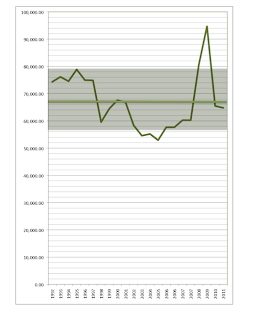
Over supply is affecting the industry due to a shift in varieties sought by brewers. Average prices are falling as growers near the end of long term contracts written at the start of the acreage run up. With the rise of craft brewing calling for different types of hops (hops that don't demand as much space due to the fact that the beer volumes aren't in the same league as the multinational brewers), these depleted acres should in time begin to fill up. Just over 10 years ago it was predicted that craft brewing would never gain more than 2% of the market, now it's predicted that it will reach 10% in a couple of years.
Know your hops: what are the names of some of the hops that are used in the top producing countries?
USA: Amarillo, Bravo, Cascade, Centennial, Chinook, Citra, Comet, Liberty, Magnum, Nugget, Simcoe,, Tomahawk.
Warrior, Willamette, Zeus
England: Bramling, Challenger, First Gold, Fuggles, Goldings, Northdown, Styrian,Target.
Germany: Hallertauer, Merkur, Opal, Perle, Saphir, Tradition.
Australia: Galaxy, Pride of Ringwood, Stella,
New Zealand: Green Bullet, Motueka, Nelson Sauvin, Wai-iti
There are also four hops known as noble hops. These are hops which are low in bitterness and high in aroma. They are:
Germany: Hallertau, Spalt, Tettnang
Czech: Saaz,

As mentioned, different hops give off different tastes aromas. Here are some beers with the hops used explained:
USA: Sierra Nevada Pale Ale. Uses two hops - Magnum and Cascade. You'll get all the aromas of the hop in this beer - pine, cedar, citrus, plus some tropical fruits in the flavour. And lots of bitterness. Think of a forest in Oregon where this hop was first developed. Lots of Mikkeller use American hops too.
ENGLAND: Meantime IPA. Uses Fuggles and Goldings. Lots of English hops give this spicy orange peel flavours.
GERMANY: Hacker Pschorr Munich Gold: Hallertau Magnum. Soft herbal hops flavours with a spiced finish. Saku Originaal also use this hops.
AUSTRALIA: Little Creatures Pale Ale. Uses Galaxy and Cascade. Lots of flavours from both of the hops - grapefruit from the Australian Galaxy, coupled with tropical fruit and resin from the American Cascade.
NEW ZEALAND: Punk IPA. Chinook, Simcoe, Nelson Sauvin, Ahtanum. Uses American and New Zealand hops, and it's the Nelson Sauvin that really shines through, with tastes of mango and passion fruit.
NOBLE: Pilsner Urquell. Classic Czech Pilsner hops Saaz are used to give the beer a citrus and spicy taste.

Many people, when they try some of the beers using American or New Zealand hops for the first time are simply blown away from the aroma which hits them on opening, and the flavour when first tasted. People are generally used to very little hops in beer, or bittering hops in beer. America is top of the charts, but in actual fact, it's the alpha hops which impart bitterness, not the aroma hops that make up most of their hop production. Although it's not always apparent, Bud and the other big boys use hops too. German hops are very soft and blend well into lagers - so they don't really taste huge either. So that's almost 80% of the market gone just with these two. In actual fact, unless you actively seek out craft beer, you're not really going to stumble upon a beer that uses Galaxy, Bravo or Nelson Sauvin. And when you do - you'll certainly know about it! I absolutely love it when I am introducing a person or group to a heavily hopped aromatic beer for the first time. The look of shear confusion turning into delight as the tropical fruits and mango aromas hit their nose is wonderful.
A friend of mine, and fellow beer geek also has similar feelings. He is slowly working through his friends converting them into craft beer hop heads. He told me a story about one of his friends who is now a Punk IPA fan. His friend said that no matter how bad a day he is having, all he has to do is put his nose into a glass of Punk IPA and he can't help smiling. I thought it was a great story, and to my suprise, the very next day when I was selling Mikkeller American Dream into a customer, they said the exact same thing. They said that each time you put your face to the glass, it was difficult to drink because of the huge smile on your face. If only you could bottle that feeling....oh wait.
Here's a great example of what I am talking about. It's a beer that could be just like any other beer. If it wasn't for the hops.
It's a beer that when you open the bottle, you are immediately hit with the aroma of tropical fruits, grassy sweetness, and sharp malts. It's a beer that when you taste it, a multitude of flavours wash over your tongue. Sugary caramel at first, passion fruit at second, tangy hops third, and then finally the bitter dryness of pine cones at the finish. And of course this is a beer you spill all down your shirt because you are smiling too much.
I'll whisper it very very quietly. This beer is a Lager. That's right - a Lager as in, not an ale. To be more precise, it's a Pilsner. But what makes it a different from your regular Pilsner, is that the hops used are American. Simcoe, Centennial and Amarillo are the magic ingredients in transforming a classic Pilsner into a wonderful beer. So good in fact, that Ratebeer.com rate it as the worlds best premium lager.
What is it? What is it? I can hear you ask. The answer is what we've all been striving for:
The American Dream.
Mikkeller "The American Dream". Denmark (although brewed at the De Proefbrouwerij, Belgium). 4.6% ABV. Ratebeer rating: 96


Lots of talk in the brewing world at the moment seems to be centering on hop varieties. The focus (in craft beer) is moving away from the traditional English, Czech and German hops, and towards the "new world" plants from America, Australia and New Zealand.
What is a hop, what is it used for and what does it do?

Humulus lupulus is a species of Humulus in the Canabaceae family. In other words, it's the female climbing plant that is related to Cannabis plant. I wouldn't advise smoking it though, it's much better used in beer.They can be used in tea and soft drinks, and can also be used medicinally to send you to sleep, but of the approx 150,000 metric tonnes of hops that are produced worldwide each year, nearly all of it ends up as the vital ingredient in providing bitterness and aroma in beer.
Hops first started being cultivated in the Hallertau region of Germany. Their hops are still used to this day - even in our very own local beer Saku (sharp intakes of breath as people actually realise that Saku contains a) something so historic and b) hops). It wasn't til a couple of hundred years later that hops were used in brewing. Beer before that was flavoured with herbs and spices to give it a bit of bite. This combination of herbs was called gruit and contained various ingredients with fantastically silly Harry Potteresque names like mugwort, yarrow, horehound and my own personal favourite; henbane. Quite why the hens didn't like this particular plant I don't know. One interesting fact about actual hops, is that it is extremely toxic to dogs, causing them to get hypothermia which in nearly all cases results in death. I bet Brewdog didn't know about that.

It was these mildly narcotic ingredients, along with various other theories, that led to the decline in the use of gruit and the switch over to hops. Some beers still use herbs and spices instead of hops, most notably the unhopped beer Sahti from our neighbours in Finland, and others have used traditional recipes to create new beers. Gruut Brewery based in Ghent, Belgium produce some fantastic tasting beers. These are available to buy from Drink Shop. http://www.gruut.be/En_Beginpagina.aspx

Hops are used in brewing because of their many benefits. They balance the sweetness of the malt with bitterness, they give off lots of different flavours and aromas, and they also act as a preservative. It's this last one that finally made brewers switch from gruit to hops - they found that their beers lasted longer using the latter.
Which incidentally is how IPA was invented. In the early 1800's beers were generally sweet and dark without much hops (read porter, stout etc). When the British troops based in India called out to the brewers back home for some beer, they waited in anticipation for it to arrive two or so month later (no Easy Jet back then). It arrived off the boat, and with mouths drooling with anticipation, was immediately racked, tapped and poured into eager glasses. They weren't very happy with the result. Due to the boat getting knocked about over the high seas, the beer getting blasted by high and then low temperatures, shook up, rolled about and generally not treated with the full care it deserved, when it did finally arrive in India, it was pretty much undrinkable. Although I BET they still drunk it. The brewers scratched their heads, and came up with the notion that hops, as a preservative could keep the beer fresh if there was enough in it. They also decided to brew the beer paler, and in a less conditioned state than the previous brews. This meant that along with the increased amount of hops, it would also be preserved by the amount of yeast in the barrel that would condition the beer along the way. The beer arrived in perfect order, and although it was much dryer than the usual brews, everyone loved it. Huzzah!! India Pale Ale, or IPA for short, was born.

Look at a glass of beer which is high in hops. Then look at the head. It's going to have a big creamy one.
Bumper sticker for my car. #1 "IPA drinkers like good head".
The idea is that you use two different types of hops, I won't go into it fully (if you want to know more - read my blog "leaves a bitter taste in your mouth"), one type of hops you add at the beginning of the boil and keep them in there for a couple of hours. These give the beer bitterness. The other type of hops is used for aroma and taste only - and that is added literally right at the end of the boiling process, or "dry hopped" where whole hop cones or pellets are added to the container and don't get boiled at all. Think of it as a soup. If you added parsley or coriander at the beginning with all the vegetables, you'd get very little flavour. If you added the chopped herbs towards the end, or actually in your soup bowl, then you'll get the benefit of these flavours and aromas without them all disappearing out of the window in a cloud of steam.
So what flavours do hops give off? Traditionally, hops from the UK give off earthy, spicy tastes and aromas. Those from Germany, Czech Republic and other Eastern European countries, give off spiced citrus and grassy aromas and flavours. The new wave of American and Southern Hemisphere hops are now bringing tropical fruits and very fresh grapefruit/mango like aromas with a soft but long lasting bitterness.
Who grows hops? The market is mostly dominated by the Germans and the US in terms of hectares, but look at Ethiopia and China in there. There is a school of thought that the Ethiopian hops "Gesho" in not in actual fact a hop at all, but more related to the buckthorn family. This is a chart from 2009. The figures have now changed, with Germany leading the market in 2011, and the US in second place. The "rest of the world" segment has increased too. There has been a huge demand for New Zealand and Australian hops - so much so, that one of the new "en vogue" hops, "Nelson Sauvin" has been totally sold out.

Here's what hop production in the USA looks like.

Over supply is affecting the industry due to a shift in varieties sought by brewers. Average prices are falling as growers near the end of long term contracts written at the start of the acreage run up. With the rise of craft brewing calling for different types of hops (hops that don't demand as much space due to the fact that the beer volumes aren't in the same league as the multinational brewers), these depleted acres should in time begin to fill up. Just over 10 years ago it was predicted that craft brewing would never gain more than 2% of the market, now it's predicted that it will reach 10% in a couple of years.
Know your hops: what are the names of some of the hops that are used in the top producing countries?
USA: Amarillo, Bravo, Cascade, Centennial, Chinook, Citra, Comet, Liberty, Magnum, Nugget, Simcoe,, Tomahawk.
Warrior, Willamette, Zeus
England: Bramling, Challenger, First Gold, Fuggles, Goldings, Northdown, Styrian,Target.
Germany: Hallertauer, Merkur, Opal, Perle, Saphir, Tradition.
Australia: Galaxy, Pride of Ringwood, Stella,
New Zealand: Green Bullet, Motueka, Nelson Sauvin, Wai-iti
There are also four hops known as noble hops. These are hops which are low in bitterness and high in aroma. They are:
Germany: Hallertau, Spalt, Tettnang
Czech: Saaz,

As mentioned, different hops give off different tastes aromas. Here are some beers with the hops used explained:
USA: Sierra Nevada Pale Ale. Uses two hops - Magnum and Cascade. You'll get all the aromas of the hop in this beer - pine, cedar, citrus, plus some tropical fruits in the flavour. And lots of bitterness. Think of a forest in Oregon where this hop was first developed. Lots of Mikkeller use American hops too.
ENGLAND: Meantime IPA. Uses Fuggles and Goldings. Lots of English hops give this spicy orange peel flavours.
GERMANY: Hacker Pschorr Munich Gold: Hallertau Magnum. Soft herbal hops flavours with a spiced finish. Saku Originaal also use this hops.
AUSTRALIA: Little Creatures Pale Ale. Uses Galaxy and Cascade. Lots of flavours from both of the hops - grapefruit from the Australian Galaxy, coupled with tropical fruit and resin from the American Cascade.
NEW ZEALAND: Punk IPA. Chinook, Simcoe, Nelson Sauvin, Ahtanum. Uses American and New Zealand hops, and it's the Nelson Sauvin that really shines through, with tastes of mango and passion fruit.
NOBLE: Pilsner Urquell. Classic Czech Pilsner hops Saaz are used to give the beer a citrus and spicy taste.
Many people, when they try some of the beers using American or New Zealand hops for the first time are simply blown away from the aroma which hits them on opening, and the flavour when first tasted. People are generally used to very little hops in beer, or bittering hops in beer. America is top of the charts, but in actual fact, it's the alpha hops which impart bitterness, not the aroma hops that make up most of their hop production. Although it's not always apparent, Bud and the other big boys use hops too. German hops are very soft and blend well into lagers - so they don't really taste huge either. So that's almost 80% of the market gone just with these two. In actual fact, unless you actively seek out craft beer, you're not really going to stumble upon a beer that uses Galaxy, Bravo or Nelson Sauvin. And when you do - you'll certainly know about it! I absolutely love it when I am introducing a person or group to a heavily hopped aromatic beer for the first time. The look of shear confusion turning into delight as the tropical fruits and mango aromas hit their nose is wonderful.
A friend of mine, and fellow beer geek also has similar feelings. He is slowly working through his friends converting them into craft beer hop heads. He told me a story about one of his friends who is now a Punk IPA fan. His friend said that no matter how bad a day he is having, all he has to do is put his nose into a glass of Punk IPA and he can't help smiling. I thought it was a great story, and to my suprise, the very next day when I was selling Mikkeller American Dream into a customer, they said the exact same thing. They said that each time you put your face to the glass, it was difficult to drink because of the huge smile on your face. If only you could bottle that feeling....oh wait.
Bumper sticker for my car #2: "Craft beer drinkers do it with a smile on their face".
Here's a great example of what I am talking about. It's a beer that could be just like any other beer. If it wasn't for the hops.
It's a beer that when you open the bottle, you are immediately hit with the aroma of tropical fruits, grassy sweetness, and sharp malts. It's a beer that when you taste it, a multitude of flavours wash over your tongue. Sugary caramel at first, passion fruit at second, tangy hops third, and then finally the bitter dryness of pine cones at the finish. And of course this is a beer you spill all down your shirt because you are smiling too much.
I'll whisper it very very quietly. This beer is a Lager. That's right - a Lager as in, not an ale. To be more precise, it's a Pilsner. But what makes it a different from your regular Pilsner, is that the hops used are American. Simcoe, Centennial and Amarillo are the magic ingredients in transforming a classic Pilsner into a wonderful beer. So good in fact, that Ratebeer.com rate it as the worlds best premium lager.
What is it? What is it? I can hear you ask. The answer is what we've all been striving for:
The American Dream.
Mikkeller "The American Dream". Denmark (although brewed at the De Proefbrouwerij, Belgium). 4.6% ABV. Ratebeer rating: 96

It hits you as soon as you open the bottle - the aroma of fresh hops. It's as if someone has opened a mango factory in the middle of a pine forest. Mikkeller have been very careful to not call this a lager in huge flashing lights. It's described in Danish, as a Pilsner brewed with water, hops, barley and yeast. Interestingly, unlike many of their other beers, it doesn't list which hops they use. Maybe it's because they don't want to scare any lager drinkers. To be honest, when they first offered it to me, I said I wasn't interested. Estonia is full of lager, and I want to bring more ale here. Trust me, Tore from Mikkeller said. I took a punt, and when I had my first sip, I was literally speechless. I also had beer all down the front of my shirt. When I'm describing it, or selling it in to a few of the places in Tallinn I think are worthy enough, I don't call it a lager. I just describe it as a wonderful refreshing beer made with American hops.
You can tell by the colour that this is not an ordinary Pilsner. Its a murky, hazy apricot gold with a very large thick head. It's also got very little carbonation. Certainly not the fizz you'd get with a commercial lager.
When you taste it, you also realise it's not an ordinary Pilsner. I've already described the tastes you get from this beer in the opening description - but really, you just don't expect this beer to taste like this. Especially at 4.6%. I'd describe it as a sort of easy drinking Punk IPA. Of course for your regular lager drinker, this would be as challenging as it comes, but for a seasoned hop drinker, it's a very good, very well balanced beer.
Mouthfeel is great - how can it not be with that massive head? The head stays all the way to the end of the glass too. Interestingly, Mikkeller describe this as an "easy drinking summer beer to be drunk straight from the bottle". Call me old fashioned, but I prefer to drink from a glass. BUT, if I was hanging out on the beach, or someones lawn at a bbq, and they brought a chill bag full of this stuff, I wouldn't object. Even if it was ice cold.
So as Brewdog say "Think about everything you know about lager, and then forget it in an instant" (ironically, this was their tagline for 77Lager, which they've now forgotten about because they think it's too boring). This is a truly lovely drink, and a champion of what can be done with hops if you choose the correct varieties.

We've got some cases of Brewdogs "IPA is dead" arriving next month. These are 4 packs of 4 beers each containing just one single hop. It was Mikkeller who first came up with the single hop series, and I really believe its the way forward. Wine does it, and it really does help the customer. Imagine, just as you do when looking for a wine, that you can browse the beer section and decide which beer to choose on it's hop variety. Same with a bar. Walk in and ask the bartender "I'd like a glass of Nelson Sauvin please". Actually - come do drink bar and do just that, I'd like to think that my staff know a thing or two about beer. Even if they don't, it might be amusing to see what they give you :)
As Easter is upon us, I feel it's only right that you crack open a few beers and raise a toast to the man who gave his life so we can enjoy ours. I can't help but think that if he had turned water into IPA instead of wine, those nasty Romans might have put him on a pedestal instead of a cross.
Bumper sticker for my car #3 "Jesus should have made beer".
Hoppy Easter!

Saturday, 4 February 2012
What temperature should you serve your beer?
Looking out of my window, I can see a chill in the air that is much colder than any fridge or freezer. It's -28c and too cold to go out, so I'll probably put the fire on, settle down in front of the TV with a couple of cold beers and watch the rugby. Cold beer - when it's already cold outside?!
You don't drink beer like you do a soup - to warm you up if it's cold outside. You generally drink beer for two reasons: refreshment and taste. The key to getting both of these correct is temperature.
The key flavour in beer is bitterness which is brought about by the hops contained in the liquid. Hops are used for many things when making beer - they add flavour, they add aroma and they also help to keep the beer fresh by having an antibiotic effect on micro organisms within the beer.
It's a female hop "cone" that is used in brewing, because just like female human beings, they contain nice smelling perfumes and essential oils.

The effect of hops on the finished beer varies by type and use, though there are two main hop types: bittering and aroma. Bittering hops have higher concentrations of alpha acids, and are responsible for the large majority of the bitter flavor of a beer. Bittering hops are boiled for a longer period of time, typically 60–90 minutes, and as they often have inferior aromatic properties, the aromas evaporate off during the boil.
Aroma hops are typically added to the brew later to prevent the evaporation of the essential oils, to impart "hop taste" and hop aroma". Aroma hops are often added after the finished brew has cooled and while the beer ferments, a technique known as "dry hopping", which contributes to the hop aroma. In cask beer, whole hop cones are sometimes added to the barrel (or cask) and slowly make their way to the bottom while the beer is fermenting. In other words, the less chance the aromas have of going up the chimney in the form of steam, the more chance they have to fragrance the beer.
Flavors and aromas are described appreciatively using terms which include "grassy", "floral", "citrus", "spicy", "piney," "lemony," and "earthy". Many pale lagers have fairly low hop influence, while lagers marketed as Pilsner or brewed in the Czech Republic may have noticeable noble hop aroma. Certain ales (particularly the highly-hopped style known as India Pale Ale, or IPA) can have high levels of hop bitterness. Dark beers have reasonably high amounts of hops too, but sometimes these aromatics are masked by the smoke and roasted flavours of the malt.
So what's all this got to do with temperature? Essential oils are nullified the colder they get. I always use a good example when talking to people about temperature and taste. Get a bottle of aftershave or perfume, and put it in the fridge overnight. In the morning, take it out and smell it. It won't smell of much. The coldness makes the oils solidify and therefore stops them giving off their aromas (they are too busy shivering to do anything else). Now imagine if this was a bottle of beer. The essential oils in the beer act much the same way as the oils in the perfume. You take the beer from the fridge, open it and nothing much leaps out.

Of course, some beers are meant to be this way. Imagine you are on a beach during a hot summers day. All that lounging about watching the local womens volleyball team perform has given you a raging...thirst. You retire to the beach bar where Alfonso hands you a bottle of Corona that has been sitting in the sun all day long. One swig of this and you have to weigh up the advantages of volleyball team/bad beer over good beach bar/no bikini clad maidens. Corona (and I'll explain the reason why I chose this beer in a minute) and other beers of this genre are drunk primarily for refreshment. You are on a beach, you're thirsty and you want to slake that thirst. You don't want a beer that is packed full of chewy flavours, because to appreciate those flavours you want to slow down and enjoy each one.
It's all about how the hops perform under what temperature they are at. If you want less flavours, you know now what a fridge does to it. It'll take away all but the strongest aromas of hops, leaving you with a cooling, slightly carbonated liquid that is easy to drink. Put that same beer in the sun for a couple of hours, and you're left with a drink having flavours that you're not supposed to taste. In fact, it's very doubtful that any aroma hops have been put into that particular beer, so the beer is in big danger of getting oxidized, which means the sun will bake these beta acids giving them a taste and aroma which is called "sun struck", or more fun "skunky". It's the reason many highly hopped beers are in dark brown or green bottles - it protects them from the sun.
The guys at Corona have taken their dedication to brewing for refreshment to such a scale that they don't add any aroma hops at all and only a very minimal amount of bittering hops into the brew. They don't want to produce a beer full of flavour, because they know in the whole, that the customer also feels this way. Sol do it too. Think about the colour of their bottle. See what I mean?
Mantra #1: If your thirsty and want refreshment, put it in the fridge.
Now the other side of the coin. It's cold outside (the weather has changed and so have the volleyball team) and you feel like having a beer that you can take your time over, taste the different levels of flavours and generally enjoy the beer and the occasion for drinking it. You ask Alfonso for a bottle of IPA and he takes it out of the fridge, pours it into a frozen glass and slides it across the bar. You put it to your lips (the glass sticks to them) and the liquid pours into your mouth filling it with flavours of....coldness. That's all. The whole reason you ordered an IPA is that you want the aromas to sing to you, the bitterness to fill your mouth and suck your cheeks in. You want to be able to taste the malt, the caramel the slightly roasted flavours, but because in this game of rock scissors paper, cold wins over everything.
In an ideal world, that bottle would have been happily sitting in a cellar with temperatures of about 10-14 degrees. This sort of temperature is cool enough to make the beer refreshing, but not cold enough to mask all those lovely alpha and beta acids of the hop oils. Unfortunately we don't live in an ideal world. One of the main reasons that bottles are in the fridge is so that they can be marketed to the customer. Pubs just don't have any space to have two sets of beers - one cold, one at room temperature. And of course, if the marketing works correctly and a customer looks at the bottle of IPA and thinks that they'll try that for the first time, they are often left disappointed because the beer is being served incorrectly. More often than not, the consumer is unaware of the huge difference temperature makes, and walks away thinking IPA's are just like any normal beer.
Mantra #2: If you're drinking for taste, take it out of the fridge.

Be a geek like me. Order two beers at the same time, and tell the barstaff to keep it unopened and out of the fridge. By the time you've finished your first, the second will be at almost the correct temperature. You can also ask if they have any not in the fridge. Be careful here though, as in most bars, the beers on the shelf are only for communication not consumption. I once went to a well known Irish bar in town, and when I asked for the bottle of Spitfire on the shelf, the barmaid looked at me as if I had two heads. She may have had a point though - halfway through drinking the beer, I asked to look at the bottle as the beer had quite a skunky taste. Sure enough, it was 3 years out of date.
The general rule of thumb is that the darker it is, the more room temperature it should be. The new wave of aggressively dry hopped beers such as Brewdog and the American micro's can actually be served a bit cooler because they have so much aroma hops inside. Put them in the fridge for an hour or two, or if you store them in the fridge, take them out for an hour or two before serving. Of course you can drink them straight from the fridge, but that's not going to do them the full justice. It's like taking a Ferrari for a spin in a 40km zone.

Don't do this at home.
I'm watching the rugby later and I'll be drinking for refreshment. My mind wants to be on the game, not my glass. I'll have a few Czech lagers. These benefit from fridge treatment, with perhaps a little half an hour airing before drinking. Czech beers use Saaz aroma hops which is quite soft and the focus is on bite rather than aroma. I still like to taste and smell the floral zest that comes from the hops, so that's why I don't chill it to death.
Tonight is another matter. The fire will be roaring, and I'll nudge my armchair that little closer as I open either my Abstrakt or Paradox Jura. These won't have been anywhere near a fridge, as I want to taste as much as possible. Depending on how roaring my fire is, I might store them in a slightly cooler room (because I don't have a cellar) before opening.
I think it'll get to the stage where as much information is going to be put on the craft beers of the future as possible. Wines talk about food, serving temperature etc, and I think it's only a matter of time before quality beers start doing the same. Some of them do it now, recommending what type of glass to use - this is only a good thing. Back in the UK, I remember we had an scheme in the bars where the customer was given a thermometer to stick in their beer. If it was too warm (because this was commercial lager), then he had a right to hand it back to the barstaff. Some glasses have a logo that turns blue if the correct temperature of beer is in the glass.
Here's a guideline on temperatures and styles:
Here's a guideline on temperatures and styles:
Very cold (0-4C/32-39F): Any beer you don’t need to taste. Pale Lager, Malt Liquor, Canadian-style Golden Ale and Cream Ale, Low Alcohol, Canadian, American or Scandinavian-style Cider.
Cold (4-7C/39-45F): Hefeweizen, Kristalweizen, Kölsch, Premium Lager, Pilsner, Classic German Pilsner, Fruit Beer, brewpub-style Golden Ale, European Strong Lager, Berliner Weisse, Belgian White, American Dark Lager, sweetened Fruit Lambics and Gueuzes, Duvel-types
Cool (8-12C/45-54F): American Pale Ale, Amber Ale, California Common, Dunkelweizen, Sweet Stout, Stout, Dry Stout, Porter, English-style Golden Ale, unsweetened Fruit Lambics and Gueuzes, Faro, Belgian Ale, Bohemian Pilsner, Dunkel, Dortmunder/Helles, Vienna, Schwarzbier, Smoked, Altbier, Tripel, Irish Ale, French or Spanish-style Cider
Cellar (12-14C/54-57F): Bitter, Premium Bitter, Brown Ale, India Pale Ale, English Pale Ale, English Strong Ale, Old Ale, Saison, Unblended Lambic, Flemish Sour Ale, Bière de Garde, Baltic Porter, Abbey Dubbel, Belgian Strong Ale, Weizen Bock, Bock, Foreign Stout, Zwickel/Keller/Landbier, Scottish Ale, Scotch Ale, American Strong Ale, Mild, English-style Cider
Warm (14-16C/57-61F): Barley Wine, Abt/Quadrupel, Imperial Stout, Imperial/Double IPA, Doppelbock, Eisbock, Mead
So, final mantra: If your thirsty and want refreshment, put it in the fridge, if you're drinking for taste, take it out of the fridge. Or another one: "Nightclub = cold, Fireplace = warm".
Right, I'm off to prepare for the sport on tv. My Czech Pilsners are in the fridge, ales and Brewdogs are in my kitchen, and I've thrown all my Estonian lagers out into the garden. I don't think that will affect their taste much.
Subscribe to:
Posts (Atom)